
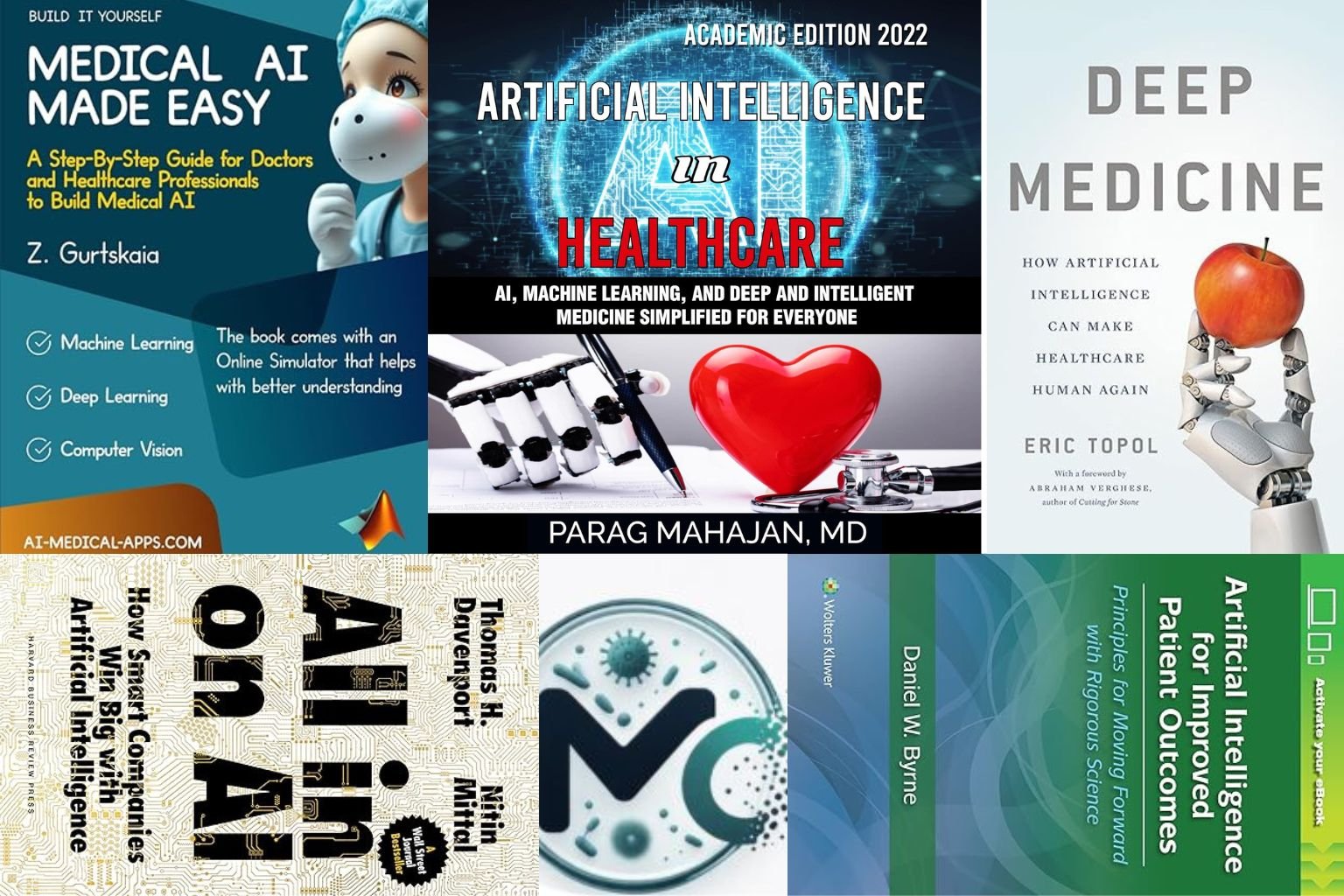
Top 5 Books on Artificial Intelligence in Healthcare (AI in Medicine & Medical Education)
Why Artificial Intelligence in Healthcare Matters More Than Ever
Recent advancements in Artificial Intelligence in Healthcare (AI in Medicine) have fundamentally transformed how clinicians diagnose diseases, deliver care, and improve patient outcomes. Systematic research shows that AI is now embedded in clinical decision-making, medical education, and healthcare systems, making it an essential skill for modern healthcare professionals.
Today, AI is no longer a futuristic concept—it is a practical tool that enhances diagnostic accuracy, clinical efficiency, and personalized medicine. As healthcare rapidly evolves, understanding AI has become a necessity rather than an option for doctors, medical students, and healthcare leaders.
Below is a carefully selected list of the top 5 books on Artificial Intelligence in Healthcare, designed to help professionals understand, apply, and benefit from AI in real-world medical practice.
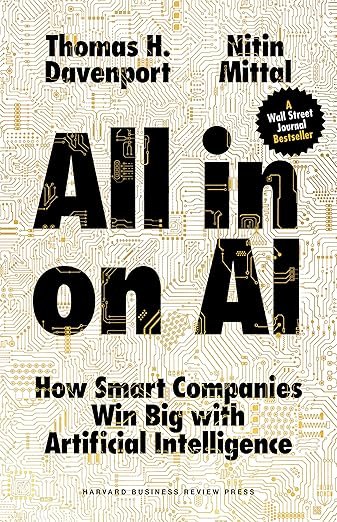
1. All-in On AI: How Smart Companies Win Big with Artificial Intelligence
This book explores how leading organizations are fully integrating Artificial Intelligence (AI) into their core strategies. It highlights how companies are using AI to improve decision-making, optimize operations, and create competitive advantages.
The authors present real-world case studies from global leaders such as Airbus and Capital One, showing how AI transforms industries at scale. It emphasizes that organizations adopting an “AI-first mindset” consistently outperform competitors.
The central idea is that AI is not just a tool but a strategic foundation for innovation and long-term growth. This concept is highly relevant to healthcare systems aiming to improve efficiency and patient care.
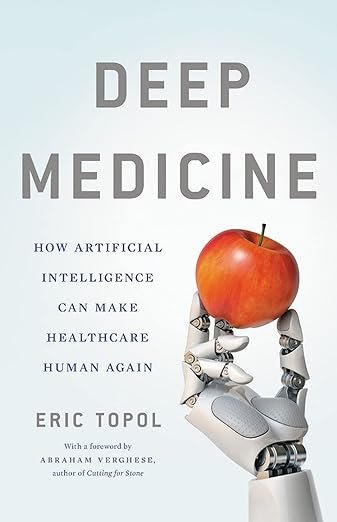
2. Deep Medicine: How Artificial Intelligence Can Make Healthcare Human Again
This influential book explains how AI in healthcare can restore humanity in medical practice. It addresses the growing problem of physician burnout and administrative overload.
The author demonstrates how AI can reduce routine tasks, allowing doctors to focus more on patient interaction and empathy. It also discusses how AI improves diagnostic accuracy and reduces medical errors.
A key message is that AI does not replace physicians—it enhances their ability to deliver compassionate, patient-centered care.
Ultimately, the book reframes AI as a tool for strengthening the doctor–patient relationship.
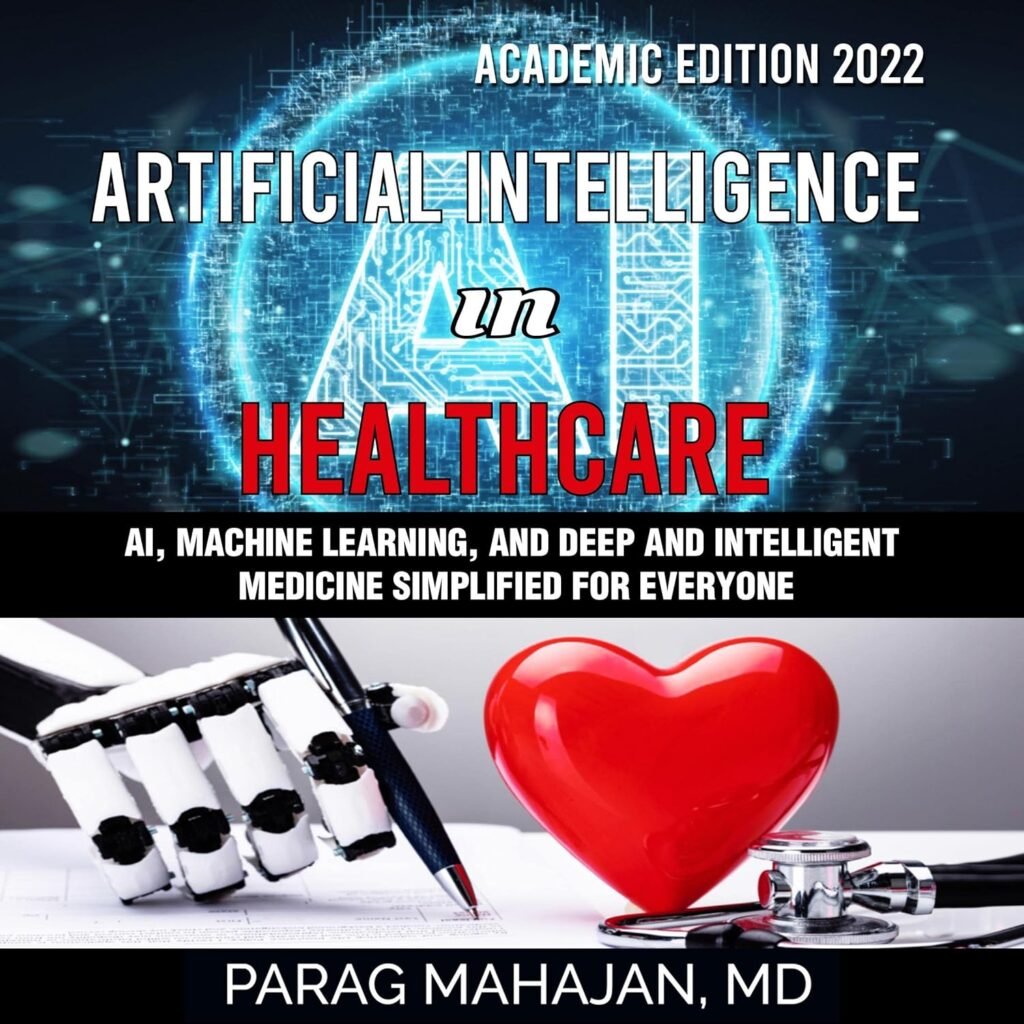
3. Artificial Intelligence in Healthcare: AI, Machine Learning, and Deep Medicine Simplified
This book provides a clear and accessible introduction to AI, machine learning, and deep learning in healthcare. It is designed for both beginners and professionals.
It covers applications across multiple areas, including medical imaging, drug discovery, electronic health records, and clinical research. It also explains how AI supports modern healthcare systems.
The book discusses ethical concerns, risks, and limitations of AI adoption in medicine, offering a balanced perspective.
Its main value lies in simplifying complex AI concepts for practical understanding in healthcare environments.
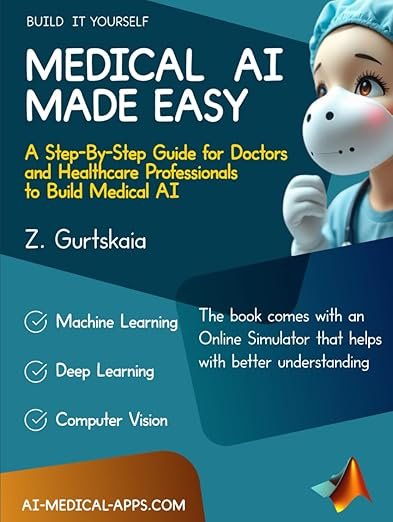
4. Medical AI Made Easy: A Step-by-Step Guide for Doctors and Healthcare Professionals
This practical guide focuses on helping healthcare professionals build AI-based medical applications even without programming experience.
It provides hands-on examples using real medical data, including machine learning models for diagnosis and image-based disease detection.
The book introduces tools such as MATLAB and includes simulations for practical learning.
It is highly focused on implementation rather than theory, making it ideal for clinicians who want to actively engage with AI development.
The core idea is empowering doctors to move from users of AI to creators of AI solutions.
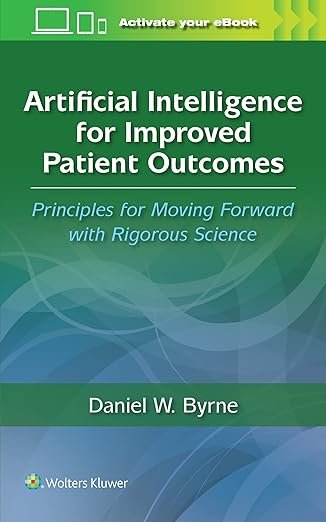
5. Artificial Intelligence for Improved Patient Outcomes: Principles for Moving Forward
This book focuses on evaluating and applying AI in clinical practice and healthcare research.
It explains how to design rigorous and ethical AI studies that produce reliable scientific evidence. It also teaches how to assess whether AI systems genuinely improve patient safety and clinical outcomes.
A major focus is on avoiding hype and ensuring that AI tools are evidence-based and clinically validated.
The book is essential for healthcare professionals, researchers, and decision-makers working in AI-driven healthcare environments.
The Future of AI in Healthcare
The integration of Artificial Intelligence in Healthcare is reshaping medical education, clinical workflows, and patient care. Research shows that AI literacy is becoming a core competency for healthcare professionals worldwide.
These five books provide a strong foundation for understanding how AI is transforming medicine—from improving diagnostic accuracy to enhancing patient outcomes and redefining healthcare delivery.
Whether you are a medical student, physician, or healthcare leader, developing knowledge in AI is now essential to staying relevant in the future of medicine.
Tags: AI in Medical Education, AI in Medicine, Artificial Intelligence in Healthcare, Healthcare AI applications, Machine Learning in Healthcare, Medical AI books, patient outcomes