
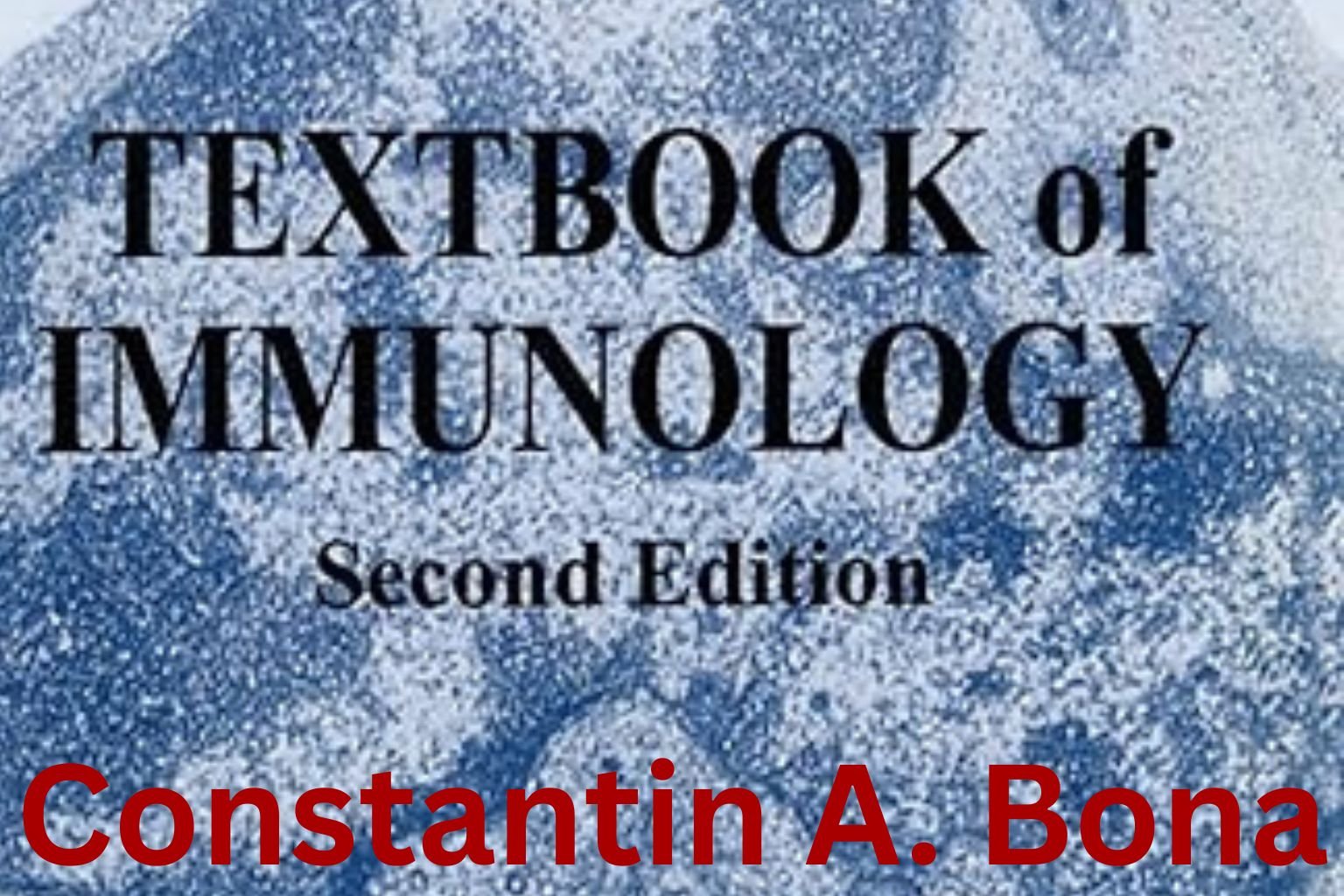
The Scientific Legacy of Constantin A. Bona
Books, Research, and a Career Timeline (with a Student-Friendly Guide)
The work of Dr. Constantin A. Bona spans more than five decades of immunology, combining groundbreaking scientific discovery, influential textbooks, and translational medical research. This blog brings together his books, major research contributions, career path, and simplified explanations in one place.
1. Books and Scholarly Writing
Dr. Bona was not only a pioneering researcher but also a prolific academic author. He contributed to 8 major scientific books, along with numerous chapters in immunology textbooks.
Full List of His Major Books
- Textbook of Immunology(DETAILS) (AMAZON)
- The Molecular Pathology of Autoimmune Diseases: A Complete Study Guide (DETAILS) (AMAZON)
- Biological Application of Anti-Idiotypes
- Idiotypes and Lymphocytes (Immunology)
- Cytokines and Cytokine Receptors: Physiology and Pathological Disorders
- Immunology for Medical Students
- Biological Applications of Anti-Idiotypes (also published in another edition/series form)
- Regulatory Idiotopes (Modern Concepts in Immunology: A Series of Monographs)
Key Themes Across His Books
1. Antibodies and Immune Regulation
His books explain how antibodies are not just defensive molecules but part of a self-regulating immune communication system.
Core ideas:
- Antibodies can regulate other antibodies
- The immune system behaves like a network
- B cells are active, programmed immune regulators
2. Idiotypes and Immune Networks
A central theme across multiple books is idiotypic regulation, including:
- Idiotypes and anti-idiotypes
- Immune system self-recognition
- Network-based immune balance
Books such as Idiotypes and Lymphocytes and Regulatory Idiotopes helped formalize these concepts.
3. Autoimmunity and Disease Mechanisms
His guide on autoimmune diseases and immunology textbooks cover:
- Immune system failure and self-reactivity
- Molecular pathology of autoimmune disorders
- Disease-specific immune dysregulation (e.g., scleroderma, diabetes)
4. Cytokines and Cell Communication
In Cytokines and Cytokine Receptors, he explored:
- Immune signaling molecules
- Cell-to-cell immune communication
- Inflammatory and pathological immune responses
5. Medical Education in Immunology
Books like Textbook of Immunology and Immunology for Medical Students were designed to:
- Teach core immunology principles
- Train medical students in immune mechanisms
- Bridge basic science and clinical medicine
2. Major Research Contributions
Dr. Bona published more than 400 scientific papers, including work in Nature, Science, and the Journal of Experimental Medicine.
A. B Cells and Early Immune Activation
He demonstrated:
- B cells can be directly activated by microbial components
- Innate immunity strongly shapes adaptive responses
- Nocardia can stimulate human B cells
B. Idiotypic Network Theory
A defining contribution of his career:
- Antibodies regulate other antibodies
- “Shared idiotypes” exist across immune systems
- Immune responses function as networks, not isolated reactions
C. Molecular Engineering of Antibodies
He contributed to:
- Antibody gene cloning
- Anti-idiotypic antibody sequencing
- Chimeric immunoglobulin design
D. Vaccine Innovation
He pioneered early concepts of:
- DNA vaccines
- Epitope-based immunization
- Cross-reactive influenza immunity
He also demonstrated synergy between:
- T-cell immunity
- B-cell immunity
E. Autoimmunity Research
Key discovery:
- Anti-fibrillin-1 autoantibodies in scleroderma
He also studied:
- TSK mouse model of autoimmune disease
- Genetic causes of immune dysfunction
F. Immune Therapy Concepts
Later work focused on:
- Immune tolerance induction
- Chimeric proteins for immune control
- Regulatory T-cell activation strategies
3. Career Timeline (Simplified)
Early Life
- Born 1933, Romania
- MD (1958), Bucharest
🇷🇴 Romania
- Head of Immunochemistry Laboratory
- Cantacuzino Institute
🇫🇷 France
- PhD, University of Paris
- Pasteur Institute research
🇺🇸 United States
- NIH researcher
- Rockefeller University
- Professor at Icahn School of Medicine at Mount Sinai

🧾 Leadership
- Founding Editor-in-Chief of International Reviews of Immunology
Legacy
- Passed away in 2015
4. Student-Friendly Summary
What did he study?
He studied how the immune system defends the body using B cells, antibodies, and signaling molecules.
What did he discover?
He showed that:
- Antibodies communicate with each other
- The immune system is a complex regulatory network
- Diseases can occur when this system becomes unbalanced
Why does it matter?
His work contributed to:
- Modern vaccine design
- Understanding autoimmune diseases
- New immune-based therapies
Simple takeaway:
The immune system is not just defense—it is a highly organized communication network that can be trained, regulated, or disrupted.
Final Legacy
Constantin A. Bona left behind:
- Foundational theories in immunology
- Major contributions to vaccine science
- Deep insights into autoimmune disease
- Eight influential scientific books
- A global legacy of students and researchers
His work continues to shape modern immunology and biomedical research today.