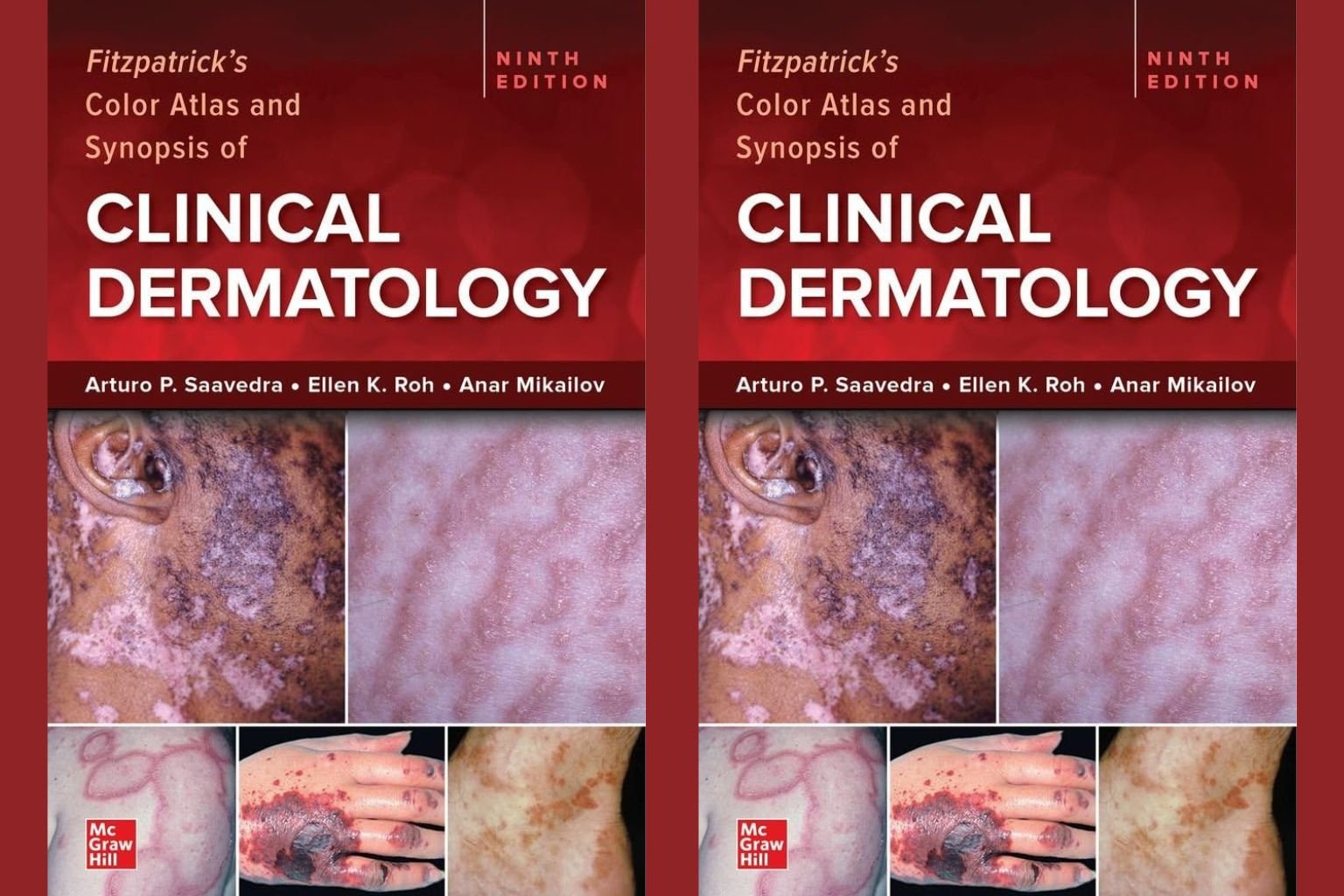
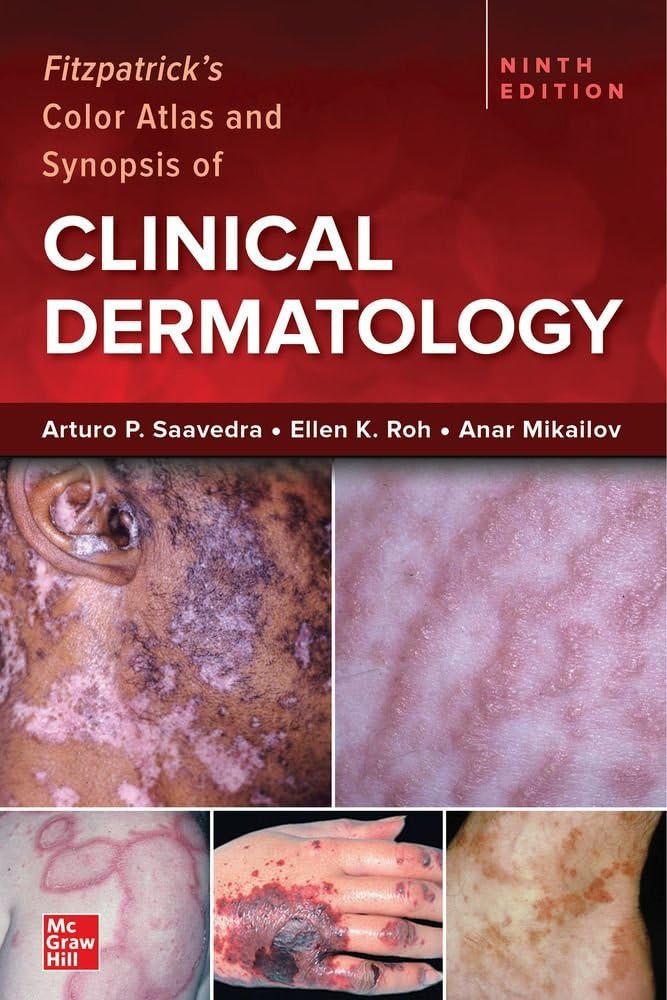
Fitzpatrick’s Color Atlas and Synopsis of Clinical Dermatology, 9e
Arturo P. Saavedra, Ellen K. Roh, Anar Mikailov
This book is a comprehensive clinical guide to dermatology, focusing on the diagnosis and understanding of skin diseases through visual presentation and concise explanations. It is structured to cover a wide spectrum of dermatologic conditions, linking clinical features with underlying causes and systemic associations.
“The best visual reference in dermatology covering the full range of dermatologic conditions, Fitzpatrick’s Color Atlas and Synopsis of Clinical Dermatology, 9e is a unique combination text, clinical reference, and color atlas. For each condition, there are one to two color photographs coupled with salient points of epidemiology, history, physical exam, differential diagnosis, laboratory and special examinations, disease course and up-to-date treatments. More than 1,500 full-color images, a unique combination text, clinical reference, and atlas contrast to most other dermatology references, this is a true quick-reference clinical guide”–Provided by publisher
Part I: Disorders Presenting in the Skin and Mucous Membranes
This part focuses on primary skin conditions and diseases that directly manifest on the skin and mucous membranes. It explores disorders of glands, inflammatory conditions like eczema and psoriasis, and genetic skin abnormalities. It also covers blistering diseases, neutrophil-mediated conditions, and acute dermatologic emergencies. In addition, it includes benign and malignant growths, pigmentation issues, and the effects of radiation and photosensitivity. The section provides a strong clinical foundation for recognizing visible dermatologic patterns.
Section 1: Disorders of Sebaceous, Eccrine, and Apocrine Glands
This section discusses diseases related to skin glands responsible for oil and sweat production. It covers conditions like acne and disorders of sweat regulation. It explains how gland dysfunction affects skin health. The section also highlights clinical presentations and variations. It emphasizes diagnosis based on visible symptoms.
Section 2: Eczema/Dermatitis
This section focuses on inflammatory skin conditions grouped under eczema and dermatitis. It includes causes such as allergies, irritants, and environmental factors. It explains acute and chronic inflammation. The section highlights clinical features like redness, itching, and scaling. It also addresses different subtypes and triggers.
Section 3: Psoriasis, Psoriasiform, and Pityriasiform Dermatoses
This section covers psoriasis and related skin disorders with similar appearances. It discusses immune-mediated mechanisms behind these diseases. It describes scaling, plaques, and chronic inflammation. The section also compares similar dermatologic conditions. It focuses on clinical differentiation.
Section 4: Ichthyoses
This section addresses inherited and acquired disorders characterized by dry, scaly skin. It explains genetic causes and skin barrier dysfunction. It highlights variations in severity and presentation. The section focuses on clinical recognition. It also discusses associated systemic features.
Section 5: Miscellaneous Epidermal Disorders
This section includes a variety of epidermal skin conditions. It covers disorders not classified in other categories. It explains structural and functional abnormalities. The section emphasizes visual diagnosis. It provides examples of diverse clinical presentations.
Section 6: Genetic and Acquired Bullous Diseases
This section focuses on blistering skin diseases of genetic and autoimmune origin. It explains how skin layers separate to form blisters. It discusses conditions like pemphigus and pemphigoid. The section highlights severity and complications. It emphasizes diagnostic patterns.
Section 7: Neutrophil-Mediated Diseases
This section explores conditions driven by neutrophilic inflammation. It explains immune system involvement in skin damage. It describes characteristic lesions and patterns. The section focuses on clinical identification. It also links to systemic associations.
Section 8: The Acutely Ill and Hospitalized Patient
This section addresses dermatologic conditions seen in critically ill patients. It explains skin manifestations of systemic illness. It highlights urgent and life-threatening presentations. The section focuses on rapid recognition. It emphasizes clinical management relevance.
Section 9: Benign Neoplasms and Hyperplasias
This section covers benign skin tumors and hyperplastic conditions. It explains common non-cancerous growths. It highlights distinguishing features from malignant lesions. The section focuses on visual identification. It includes various skin growth patterns.
Section 10: Photosensitivity, Photo-Induced Disorders, and Disorders by Ionizing Radiation
This section discusses photosensitivity and radiation-induced skin disorders. It explains mechanisms of UV damage. It covers photodermatoses and radiation effects. The section highlights clinical patterns. It emphasizes environmental triggers.
Section 11: Precancerous Lesions and Cutaneous Carcinomas
This section focuses on precancerous skin lesions and cutaneous carcinomas. It explains progression from early lesions to malignancy. It highlights common skin cancers. The section emphasizes early detection. It focuses on visual warning signs.
Section 12: Melanoma Precursors and Primary Cutaneous Melanoma
This section covers melanoma and its early indicators. It explains risk factors and disease progression. It highlights changes in pigmented lesions. The section focuses on clinical recognition. It emphasizes early diagnosis importance.
Section 13: Pigmentary Disorders
This section discusses pigmentary skin disorders. It includes hyperpigmentation and hypopigmentation conditions. It explains melanin-related mechanisms. The section highlights visible skin changes. It focuses on differential diagnosis.
Part II: Dermatology and Internal Medicine
This part connects skin diseases with systemic and internal conditions. It explains how internal disorders manifest on the skin. It covers immune, metabolic, genetic, and vascular diseases. The section highlights the skin as a diagnostic window. It emphasizes interdisciplinary medical understanding.
Section 14: The Skin in Immune, Autoimmune, Autoinflammatory, and Rheumatic Disorders
This section explores immune-related skin diseases. It explains autoimmune and inflammatory mechanisms. It highlights systemic disease connections. The section focuses on clinical patterns. It emphasizes diagnostic relevance.
Section 15: Endocrine, Metabolic, and Nutritional Diseases
This section covers endocrine and metabolic skin disorders. It explains nutritional deficiencies and their dermatologic effects. It highlights systemic imbalances. The section focuses on visible clinical indicators. It connects dermatology with internal medicine.
Section 16: Genetic Diseases
This section discusses genetic skin disorders. It explains inherited mutations and clinical manifestations. It highlights syndromic associations. The section focuses on clinical recognition. It emphasizes hereditary patterns.
Section 17: Skin Signs of Vascular Insufficiency
This section explores vascular-related skin changes. It explains effects of poor blood circulation. It highlights ulcers, discoloration, and ischemic signs. The section focuses on clinical diagnosis. It emphasizes underlying vascular causes.
Section 18: Skin Signs of Renal Insufficiency
This section discusses renal disease skin manifestations. It explains effects of toxin accumulation. It highlights itching, dryness, and pigmentation changes. The section focuses on systemic connections. It emphasizes diagnosis through skin findings.
Section 19: Skin Signs of Systemic Cancers
This section covers cutaneous signs of internal malignancies. It explains paraneoplastic syndromes. It highlights early warning indicators. The section focuses on early detection. It connects dermatology with oncology.
Section 20: Skin Signs of Hematologic Disease
This section discusses skin manifestations of blood disorders. It explains abnormalities in blood cells and clotting. It highlights bruising, pallor, and lesions. The section focuses on clinical indicators. It emphasizes systemic diagnosis.
Section 21: Cutaneous Lymphomas and Sarcoma
This section focuses on malignant skin tumors such as lymphomas and sarcomas. It explains disease progression and pathology. It highlights clinical features. The section emphasizes diagnosis and classification. It connects with oncologic dermatology.
Section 22: Skin Diseases in Solid Organ and Bone Marrow Transplantation
This section discusses dermatologic complications in transplant patients. It explains effects of immunosuppression. It highlights infections and skin complications. The section focuses on clinical management. It emphasizes patient vulnerability.
Section 23: Adverse Cutaneous Drug Reactions
This section covers drug-induced skin reactions. It explains hypersensitivity and toxic responses. It highlights different clinical patterns. The section focuses on early identification. It emphasizes patient safety and pharmacology.
Section 24: Disorders of Psychiatric Etiology
This section explores psychodermatology and psychiatric-related skin conditions. It explains behavioral and emotional influences. It highlights self-induced lesions. The section focuses on diagnosis and management. It connects mental health with dermatology.
Part III: Diseases Caused by Microbial Agents
This part focuses on infectious skin diseases. It covers bacterial, fungal, viral, and parasitic infections. It explains transmission mechanisms and clinical features. The section emphasizes diagnosis based on presentation. It highlights infectious dermatology patterns.
Section 25: Bacterial Colonizations and Infections of Skin and Soft Tissues
This section discusses bacterial skin infections. It explains colonization and invasion mechanisms. It highlights common pathogens. The section focuses on clinical features. It emphasizes spread and diagnosis.
Section 26: Fungal Infections of the Skin, Hair, and Nails
This section covers fungal dermatologic infections. It explains dermatophytes and yeast infections. It highlights scaling, discoloration, and nail changes. The section focuses on clinical recognition. It emphasizes infection patterns.
Section 27: Viral Diseases of Skin and Mucosa
This section discusses viral skin infections. It explains transmission and lesion formation. It highlights warts, herpes, and viral eruptions. The section focuses on clinical appearance. It emphasizes identification and diagnosis.
Section 28: Arthropod Bites, Stings, and Cutaneous Infestations
This section explores arthropod-related skin conditions. It explains bites, stings, and infestations. It highlights itching, inflammation, and allergic reactions. The section focuses on recognition. It emphasizes environmental exposure.
Section 29: Systemic Parasitic Infections
This section covers parasitic infections with skin manifestations. It explains systemic involvement. It highlights dermatologic signs of parasitic disease. The section focuses on diagnosis. It connects with infectious disease medicine.
Section 30: Sexually Transmitted Diseases
This section discusses sexually transmitted infections (STDs). It explains dermatologic manifestations. It highlights lesions, ulcers, and rashes. The section focuses on clinical recognition. It emphasizes public health relevance.
Part IV: Skin Signs of Hair, Nail, and Mucosal Disorders
This part focuses on hair, nail, and mucosal disorders. It explains diseases affecting these specialized structures. It highlights structural and functional abnormalities. The section emphasizes clinical observation. It connects dermatology with physiology.
Section 31: Disorders of Hair Follicles and Related Disorders
This section covers hair follicle disorders. It explains hair loss (alopecia) and growth abnormalities. It highlights different clinical patterns. The section focuses on diagnosis. It emphasizes hair pathology.
Section 32: Disorders of the Nail Apparatus
This section discusses nail disorders. It explains structural abnormalities and discoloration. It highlights clinical nail changes. The section focuses on recognition. It connects nail findings to systemic disease.
Section 33: Disorders of the Mouth
This section explores oral mucosal diseases. It explains lesions, infections, and inflammatory conditions. It highlights diagnostic features. The section focuses on clinical examination. It emphasizes systemic links.
Section 34: Disorders of the Genitalia, Perineum, and Anus
This section covers dermatologic conditions of genital and perianal areas. It explains infections and inflammatory diseases. It highlights clinical presentations. The section focuses on diagnosis and management. It emphasizes sensitive patient care.
Section 35: Generalized Pruritus Without Skin Lesions (Pruritus Sine Materia)
This section discusses generalized itching without visible lesions. It explains systemic and neurological causes. It highlights diagnostic challenges. The section focuses on clinical evaluation. It emphasizes underlying conditions.
Appendices
Appendix A: Differential Diagnosis of Pigmented Lesions
This appendix provides guidance on differential diagnosis of pigmented lesions. It explains diagnostic criteria. It highlights key distinguishing features. It supports clinical decision-making. It emphasizes visual comparison techniques.
Appendix B: Dermoscopy
This appendix introduces dermoscopy as a diagnostic tool in dermatology. It explains techniques and dermoscopic patterns. It highlights its role in early skin cancer detection. It focuses on skin lesion analysis. It enhances diagnostic accuracy.
Appendix C: Drug Use in Pregnancy
This appendix discusses drug safety in pregnancy. It explains risk classifications and guidelines. It highlights dermatologic medications considerations. It focuses on maternal and fetal safety. It supports clinical decision-making.