
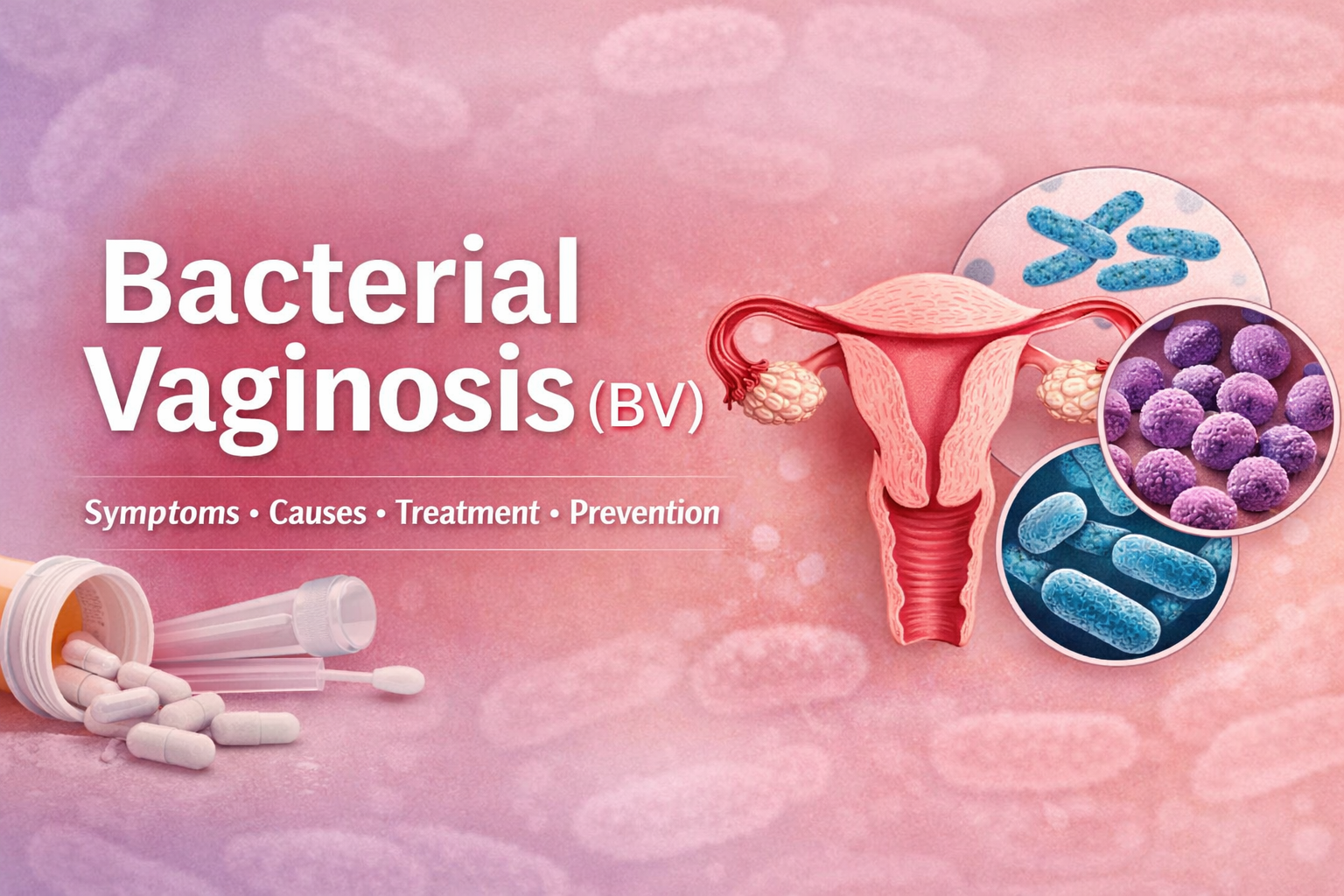
Everything You Need to Know
What is Bacterial Vaginosis?
Bacterial Vaginosis, commonly known as BV, is a condition that affects the balance of bacteria inside the vagina.
Normally, the vagina contains a mix of “good” and “harmful” bacteria. When this balance is disrupted and harmful bacteria grow more than usual, BV can develop.
It is not considered a dangerous condition in most cases, but it can cause discomfort and increase the risk of other infections if left untreated.
How common is BV?
BV is one of the most common vaginal conditions, especially among people of reproductive age (approximately 15 to 44 years old).
Many people may have it without even noticing any symptoms.
Causes and Risk Factors
The exact cause of BV is not fully understood, but it is strongly linked to an imbalance in vaginal bacteria.
Certain factors may increase the risk of developing BV, including:
- Having new or multiple sexual partners
- Not using condoms consistently
- Douching or using internal vaginal cleansers
- Natural changes in vaginal chemistry
BV is more common in sexually active individuals, but it is not classified as a traditional sexually transmitted infection.
How does BV spread?
Doctors and researchers still do not fully understand how BV develops or spreads.
However, it is known that sexual activity can influence the bacterial balance in the vagina.
Despite this connection, BV is not clearly defined as an STI.
Important facts:
- BV can occur in people who are sexually active or not
- It is rare in individuals who have never had sexual activity
- It does not spread through toilet seats, swimming pools, or bedding
- Treating sexual partners is usually not required
Symptoms of BV
Some people with BV do not experience any symptoms at all.
When symptoms do appear, they may include:
- Thin white or gray vaginal discharge
- Strong fish-like odor, especially after sexual activity
- Itching or irritation in the vaginal area
- Burning sensation during urination
- General discomfort around the vagina
How is BV diagnosed?
A healthcare provider can diagnose BV through:
- A physical examination
- Testing a sample of vaginal fluid
- Checking for bacterial imbalance under laboratory analysis
Self-diagnosis is not recommended because symptoms can overlap with other infections.
Treatment Options
BV is treatable with antibiotics prescribed by a healthcare provider.
Treatment may come in the form of:
- Oral medication
- Vaginal gels or creams
It is very important to complete the full course of treatment even if symptoms improve early.
Even after successful treatment, BV can sometimes return.
Can BV affect pregnancy?
Yes. If BV occurs during pregnancy and is left untreated, it may increase the risk of:
- Premature birth
- Low birth weight
Because of this, pregnant individuals are encouraged to seek medical advice if symptoms appear.
What happens if BV is not treated?
In some cases, BV may go away on its own, but leaving it untreated can increase health risks, such as:
- Higher chance of contracting or transmitting HIV
- Increased risk of STIs like chlamydia and gonorrhea
- Possible complications leading to pelvic inflammatory disease (PID), which may affect fertility
Prevention Tips
While BV cannot always be fully prevented, some steps may reduce the risk:
- Avoid douching or internal cleansing products
- Use condoms consistently and correctly
- Limit the number of sexual partners
- Maintain good genital hygiene without over-washing