
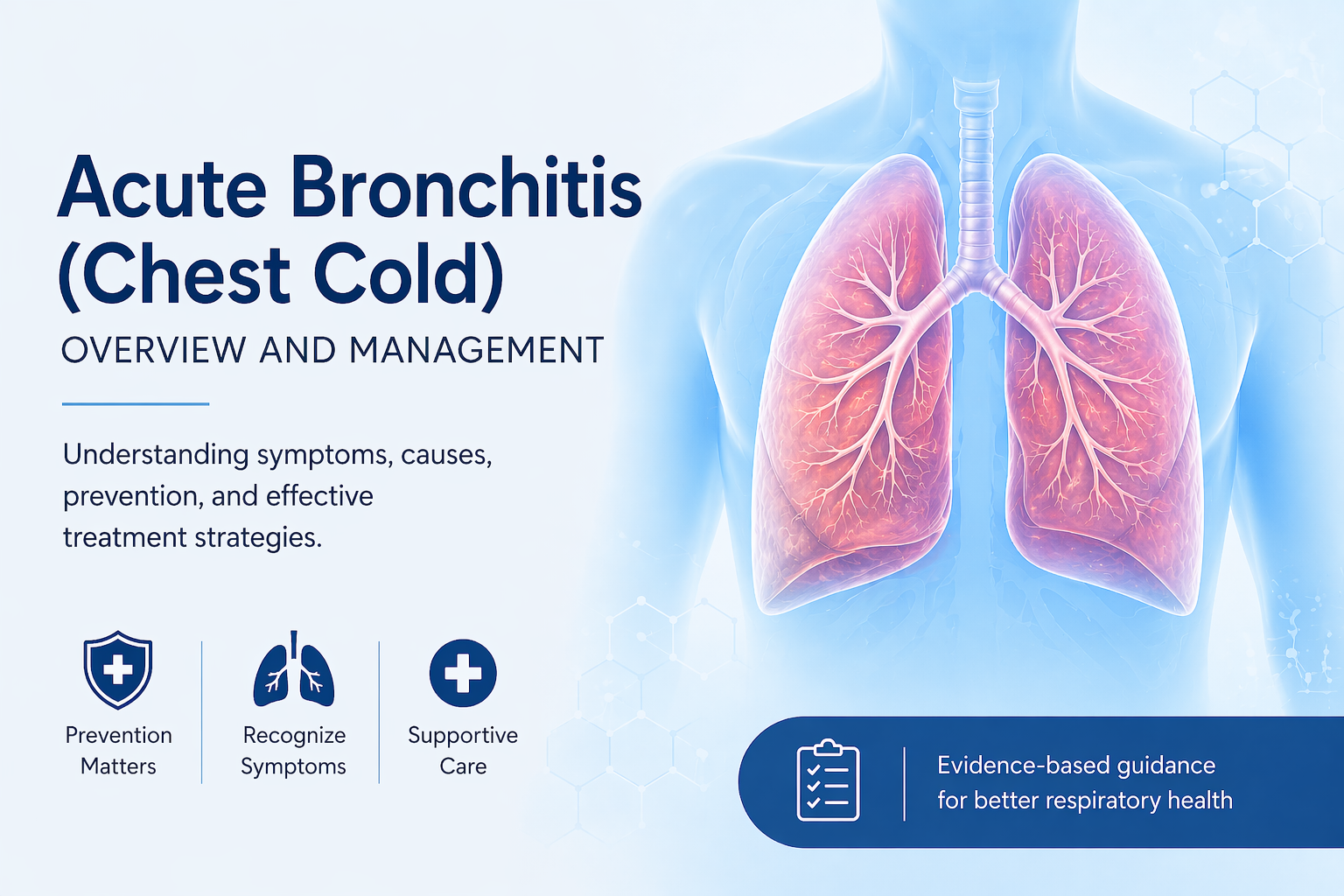
Key Highlights
- Acute bronchitis (chest cold) is a self-limiting respiratory condition.
- Primarily caused by viral infections affecting the lower respiratory tract.
- Antibiotics are not indicated in uncomplicated cases and do not improve outcomes.
- Supportive care remains the cornerstone of treatment.
Definition and Pathophysiology
Acute bronchitis is characterized by inflammation of the bronchial airways, leading to increased mucus production and airway irritation. This results in impaired airflow and triggers the cough reflex, the hallmark symptom of the condition.
Clinical Presentation
Symptoms are typically mild to moderate and resolve within <3 weeks.
Primary Symptoms
- Persistent cough (± sputum production)
- Fatigue and generalized weakness
- Nasal congestion
- Sore throat
Associated Symptoms
- Mild musculoskeletal discomfort
- Chest discomfort related to coughing
Etiology
- Predominantly viral origin
- Occasional bacterial involvement (limited role)
- Routine antibiotic use is not recommended
Prevention Strategies
Vaccination
- Up-to-date immunization, including influenza vaccine
Infection Control Practices
- Hand hygiene (washing or sanitizing)
- Covering coughs and sneezes
- Surface disinfection
Environmental Measures
- Improved ventilation
- Air purification
- Outdoor gatherings when possible
Indications for Medical Evaluation
- Persistent or high-grade fever (>5 days)
- Hemoptysis (bloody sputum)
- Dyspnea or breathing difficulty
- Symptoms >3 weeks
- Recurrent bronchitis episodes
Special Consideration
- Infants <3 months with fever require immediate medical attention
Management Approach
General Principles
- Self-limiting condition
- Avoid unnecessary antibiotics
- Risk of adverse effects and antimicrobial resistance
Exceptions
- Pneumonia or pertussis → may require antibiotics
Supportive Care and Symptom Relief
Non-Pharmacological Measures
- Adequate rest
- Hydration
- Humidified air
- Steam inhalation
- Saline nasal preparations
Pediatric Considerations
- Mucus suction (infants)
- Avoid lozenges <4 years
- Honey (>1 year) for cough relief
Use of Over-the-Counter Medications
General Guidance
- Symptomatic relief only (not curative)
- Proper dosing is essential
Analgesics and Antipyretics
- <3 months: medical supervision only
- 3–6 months: acetaminophen
- ≥6 months: acetaminophen or ibuprofen
Cough and Cold Preparations
- Not recommended <6 years (safety concerns)
- Use with medical guidance in older children